Eleventh Sunday in Ordinary Time – Year A: 13.06.26
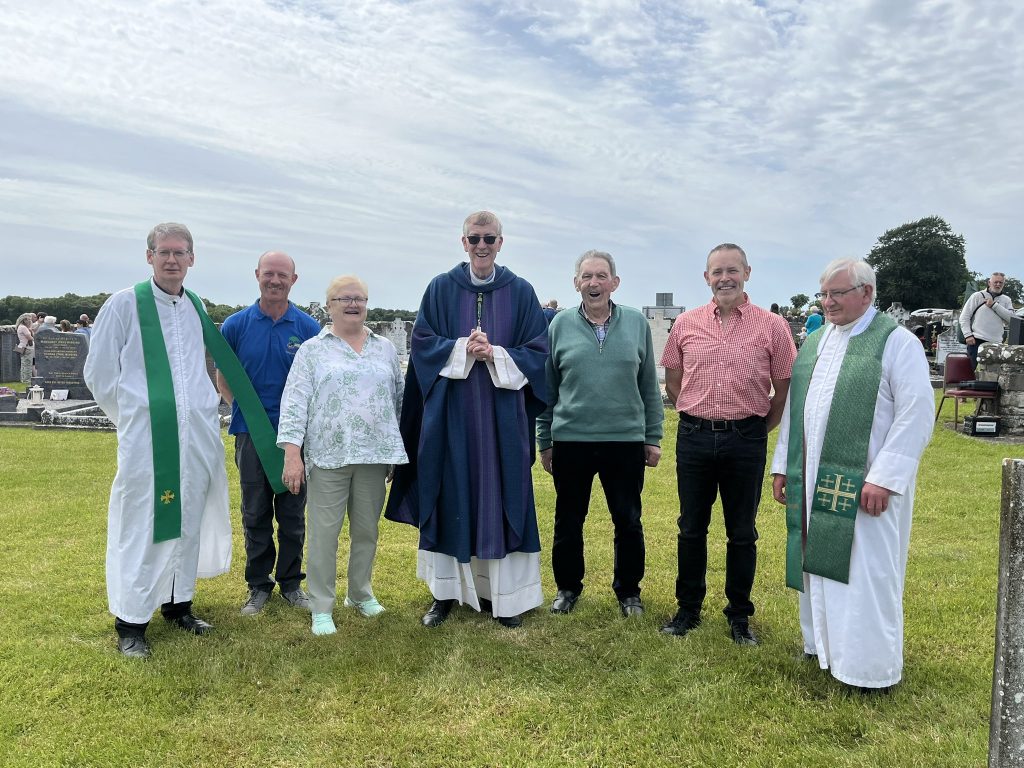
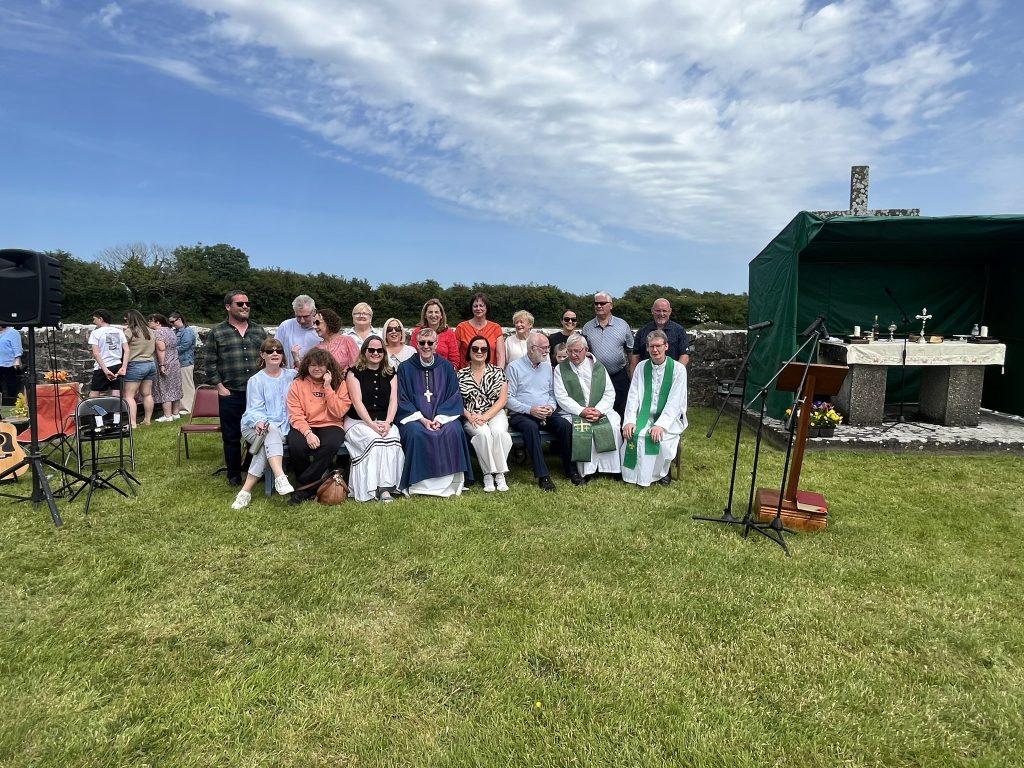
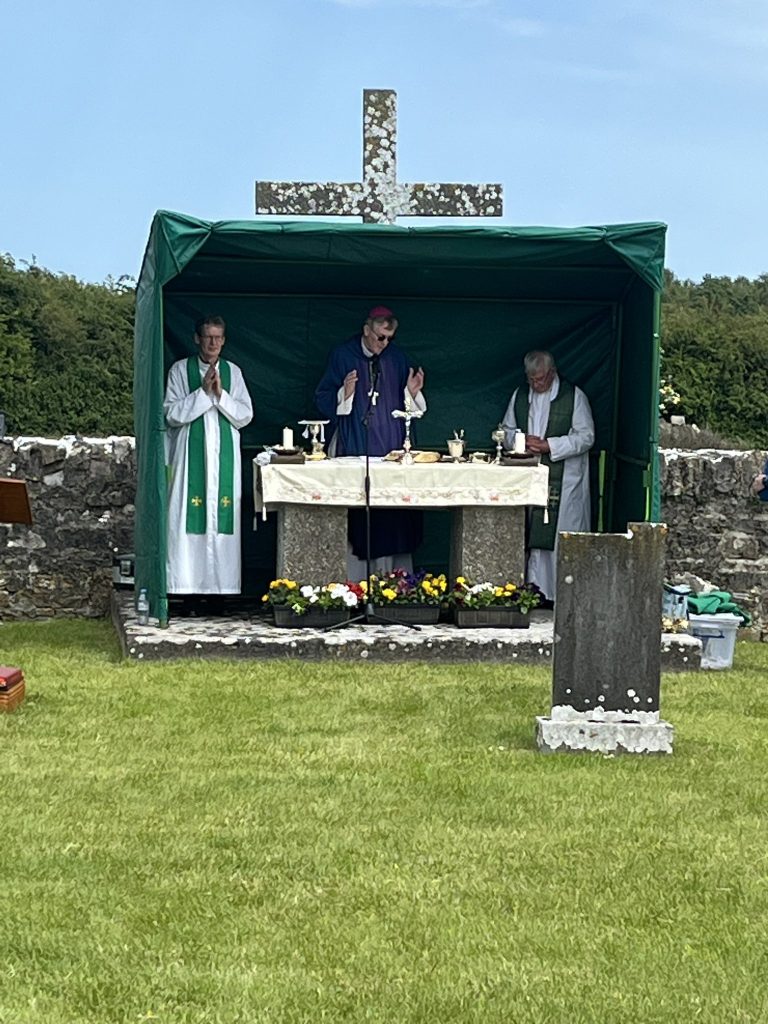
Mass – Lullymore Graveyard – Rathangan Parish
Introduction:
A year ago, on June 15th, I celebrated Mass on a Sunday afternoon at a Penal Rock in Ballyteague in what was known as the Priests Corner in Penal Days. Exactly one year later I have come to Lullymore to continue exploring the sacrifices those before us made for their faith in a time where terror reigned.
Here in Lullymore we stand on sacred ground, ground associated with the disciple of St. Patrick, Erc, whom Patrick appointed Bishop of Lullymore. Predecessors of my own are associated with Lullymore including Bernard Dunne, James Gallagher and James Keeffe, Penal Bishops who remained steadfastly close to their people.
Matthew’s gospel remind us the “the harvest is rich, but the labourers are few”[1]. In 2026, in this third millennium, we may think we are living in challenging times with an aging and overburdened clergy and perhaps a less commitment laity, where even finding volunteers at parish level presents real challenges.
What we are living through pales into insignificance when compared to the 17th and 18th centuries. So then and now we must remember its God’s Church, not ours, so we place it in His hands as we pray for God’s love and mercy, for falling back too readily on our own meagre resources and not relying on His bountiful gifts …
- Is tusa Tobar na Trócaire – you are the wellspring of mercy:
A Thiarna, déan trócaire
- Is tusa Slí na Fírinne – you are the way of Truth:
A Chríost, déan trócaire
- Bí linn i gcónaí, ós ár gcomhair amach – be with us always, showing us the way.
A Thiarna, déan Trócaire
Homily:
Ballyteague is on the path to Lullymore. It was through Ballyteague that Patrick and Brigid walked to see their friend Erc here at Lullymore. Years later this area of Kildare would become a refuge for bishops in Penal times. Bishops associated with these parts include Bernard Dunne (1724-1733); Stephen Dowdall (1733-1737), James Gallagher (1737-1751) and James Keeffe (1751-1787). I recall at the Ballyteague Mass Rock celebration, a year ago, using a Penal Chalice, discovered some years earlier, perfectly preserved in the Bog of Allen.
Bogs are renowned for preserving articles of antiquity. As I held that chalice my mind went back to those who would have held the same chalice hundreds of years earlier, hurriedly celebrating the sacrifice of the Mass for fear of the red coats coming over the hill yonder. As a Protestant poet wrote:
“Oh! Weep those days – the penal days
When Ireland hopelessly complained.
Oh! Weep those days – the penal days
When godless persecution reigned.
They bribed the flock, they bribed the son
To sell the priest and rob the sire.
Their dogs were taught alike to run
Upon the scent of wolf and friar”[2].
I also think of the Prosperous Crozier found in these parts in 1839 during a regular turf cutting, a crozier dating from the late 9th to the early 11th century. It was cared for, over many years by the Jesuits in Clongowes before being loaned to the National Museum in 2018. The tangible links us with the proud heritage of our past.
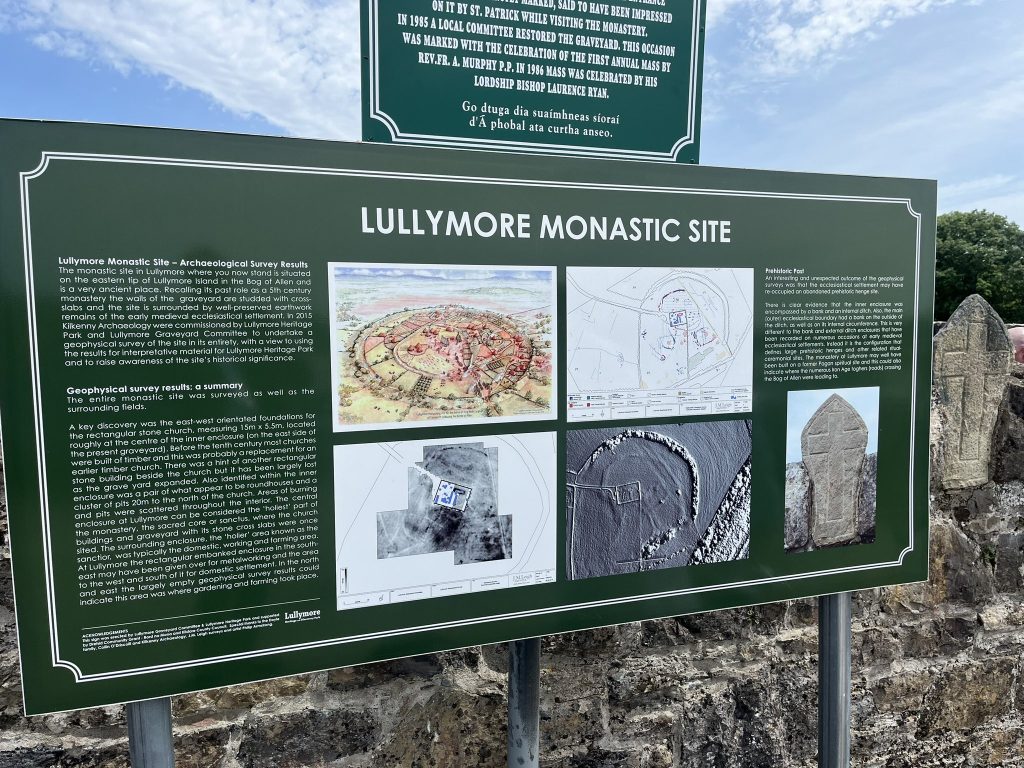
And here in Lullymore we are surrounded by stones, headstones, some legible, some illegible, that mark a burial site, more stones, thanks to the local Heritage Committee that are reminiscent of a monastic site. One large boulder bears the footprint of St. Patrick. We are walking this afternoon in the footprints of Patrick, of Erc, of those gone before us who sowed the seed of faith in this little religious oasis and sanctuary that is itself completely protected by the Bog of Allen. Just like the chalice at Ballyteague, the Crozier at Prosperous, this whole island is itself a tangible link to a faith-filled past.
Every cemetery reminds us of a past, a sacred past. On some headstones we may no longer be able to trace names, like I did with a group visiting Old Killaderry Cemetery in Daingean a week ago or at Cross Patrick in Allen last year, but we know they were here and they are now looking on Him face to face. The diocesan historian Comerford reminds us Lullymore is an “oasis surrounded on every side by the bog of Allen”[3].
It was here that Erc who came from my native parish of Slane, to Lullymore; it was here he founded a monastery and a school. Erc was the pagan druid who acknowledged Patrick in the standoff with King Laoghaire. Every ancient monastery makes a claim to have been the largest on the island of Ireland. We will never know, safe to say, we are here today, while many other monastic settlements have become rookeries for crows and sanctuaries for jackdaws!
Centuries after St. Erc, because of the bog providing a natural barrier to those enforcing penal laws, Lullymore offered a safe haven once again for priests and religious communities and indeed the aforementioned bishops who shepherded their people from these parts. I have no doubt that the words of Matthew resonated well with those then in these parts who looked on the crowds who were “harassed and dejected, like sheep without a shepherd”[4]. Except they never were without a shepherd, because their bishops and our Lord and Shepherd never left them.
Our translation of lectionary texts is currently being revised, the word “sorry”[5] is not seen as a good translation, “compassion” is a much stronger translation. The Lord had compassion for his people, and those who sought refuge in Lullymore over the years too had compassion on those who surrounded them. To have compassion is to see another.
Pope Francis in introducing us to synodality reminded us seeing one another was a first step before we judged or acted! In 2019 he said “compassion allows you to see reality; compassion is like the lens of the heart: it really makes us take in and understand the true dimensions”[6]. Pope Leo reminded migrants in recent days in Tenerife: “God’s love knows no borders, makes no distinctions, is given to all and brings us together in unity”[7]. He implored receiving communities to integrate those fleeing war, poverty and climate change, sparing them from the ‘silent shipwreck’ of abandonment.
The harvest is rich indeed. Lullymore is rich indeed. Let us work harder at removing the borders, the distinctions that inhibit us fully living the gospel this day, as we not only walk in the feet of Ss. Erc and Patrick; of Bishops Bernard Dunne, James Gallagher and James Keeffe; of the many other legible and illegible names written years ago on these sacred stones and of those early disciples called by name in Matthews text, to fully live out our baptismal calling. If we all live out fully our baptismal calling, the harvest will be rich indeed for priestly and lay vocations! Amen.
[1] Mt.9:37
[2] Hayden, Augustine OFM, ‘Ireland’s Loyalty to the Mass’, Sophia Institute Press, 2023 pgs. 137-138
[3] Comerford, Michael: ‘Collections relating to the Diocese of Kildare and Leighlin’, Vol. II, Diocese of Kildare, James Duffy & Sons, Dublin, 1883, pg.47
[4] Mt.9:36
[5] ibid
[6] Pope Francis, Homily in Santa Marta, 17 September 2019
[7] Pope Leo XIV, Address in Migrant Centre, Tenerife, 12 June 2026