Second Sunday of Advent – Year A: 07.12.25
11.30am St. Conleth’s, Newbridge
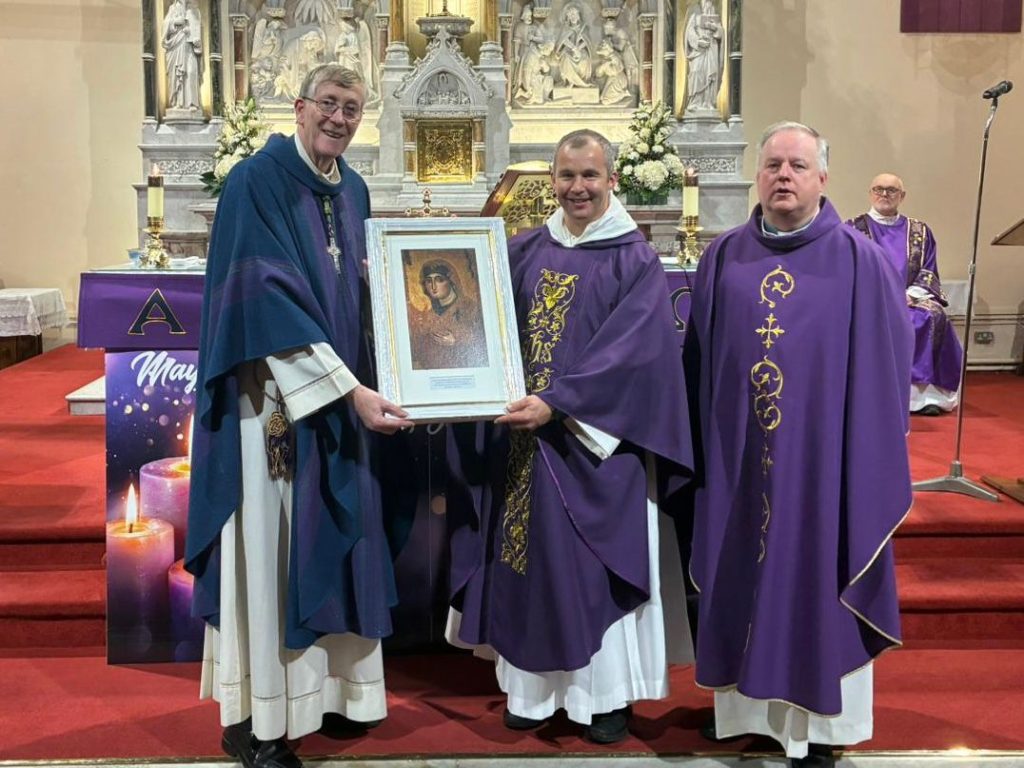
Opening & Blessing of Cenacle
Honouring of Dominicans 800th anniversary of their arrival in Ireland (1224)
Introduction:
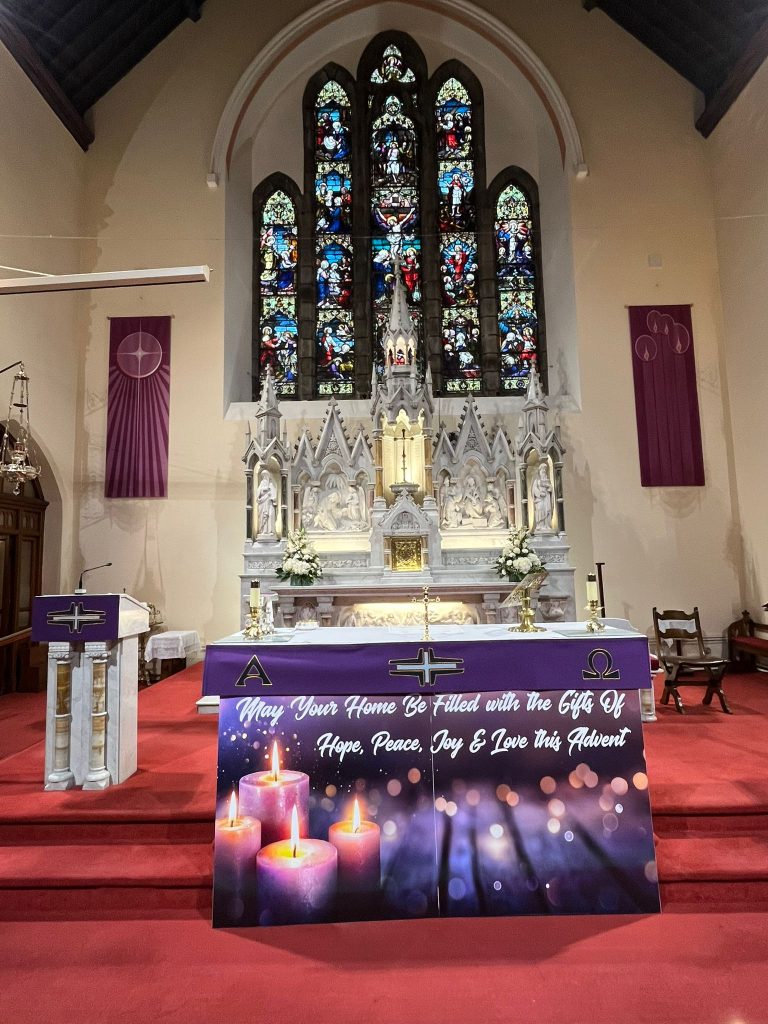
I am delighted to join with you here in St. Conleth’s this morning for Mass on this the Second Sunday of Advent. John the Baptist enters the Advent season and in doing so ruffles the Pharisees and Sadducees who dared to venture out to the desert to hear him preach.
The late Bishop Martin Drennan reminded us the God, the Baptist proclaimedis“a God who refuses to be controlled or tamed”[1]. Our problem is we spend too long in our lives trying to control God, to make Him fit into our neat spec, God doesn’t conform to any specifications!
John the Baptist’s message is still relevant today: “prepare a way for the Lord, make his paths straight”[2]. Let’s pause at this second stage on our Advent journey as we call to mind the weaknesses and sins that allow our paths to remain crooked and uneven …
- Is tusa Tobar na Trócaire – you are the wellspring of mercy:
A Thiarna, déan trócaire
- Is tusa Slí na Fírinne – you are the way of Truth:
A Chríost, déan trócaire
- Bí linn i gcónaí, ós ár gcomhair amach – be with us always, showing us the way.
A Thiarna, déan Trócaire
Homily:
A locust is an African or Asian grasshopper; they migrate in swarms and consume all vegetation on their track. Locusts and wild honey formed the stable diet of John the Baptist. Similar to the midgets that carry the blue tongue virus currently infecting livestock, milk yield and progeny in Northern Ireland, locusts unfortunately travel in swarms. Like the locusts John the Baptist came from North Africa. He was born of elderly parents. His father Zechariah, broke out of his muteness to speak: “His name is John”[3]. He was an only child and lived very much alone.
The spirituality of Advent calls on us to be patient, to take time out on our own and even to enter a little wilderness journey represented for instance by our Advent wreath. Living with a loved one who is sick, visiting the hospital, dropping into the nursing home teaches us all, the Advent lesson on patience wonderfully. We all know we can spend all the hours of the day by the bed of a loved one, and their moment to pass can slip away in the twinkling of an eye. She was just gone out to the coffee machine, when he slipped away; he was gone to the car for his mobile when she breathed her last. And that’s horribly tough, because God’s time isn’t our time, and isn’t of our choosing or making. Advent teaches us all to be patient, and to give space not only to God but to those we love.
What was John the Baptist doing in the wilderness? He was baptizing people from Jerusalem, Judea, and “the whole region around the Jordan”[4]. We don’t make enough of baptism. We see it as some past event “I have been baptised”. It’s present tense we should always use with baptism, “I am baptised”. The current Synodal pathway that we are on in the country is focusing on our baptism and our living out of that baptismal calling. We know that in time the Baptist will baptise Jesus. And at that moment God speaks. God continues through our living out of our baptismal dignity.
Fr. Liam Bergin[5] reminds us baptism hasn’t formed the Irish Catholic imagination, the way the Mass has. We like to celebrate Masses for everything, while we fail to understand how baptism continues to impact and shape us. Only in retrieving the centrality of our baptism will we come to a deeper appreciation of the Mass. Christ present in the congregation; Christ present in the presider; Christ present in the Word and Christ present in the consecrated elements of bread and wine. A friend of mine edited a book last year on the lives and legacy of holy Irish men and women calling it ‘The Rock from which you were Hewn’[6], it might also be called ‘the water in which we were baptised”. Advent calls us back to that water, back to our baptism.
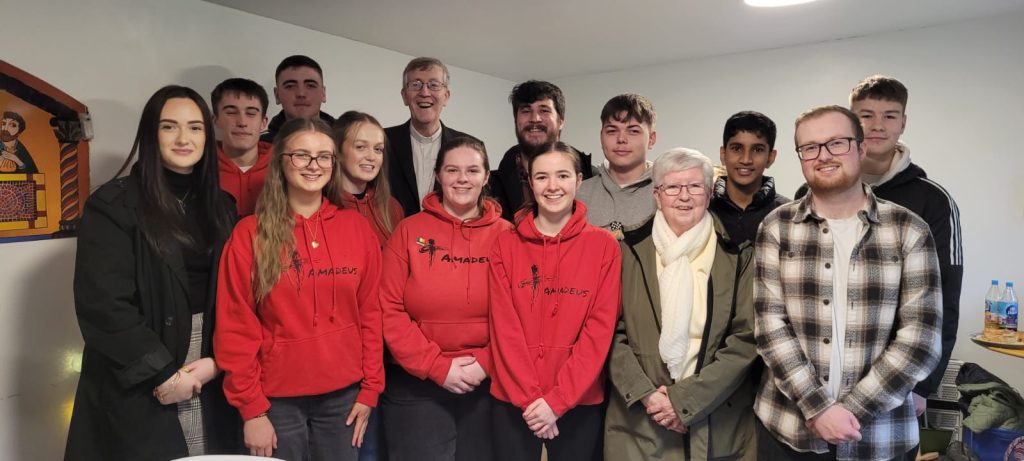
‘Cenacle’ means the room in which the Last Supper was shared. What a beautiful name for that gathering space for young people to reflect on their baptism, on their place in the Church today. I am so delighted to be blessing it with holy water, the water of baptism and opening it today. Indeed the book I earlier referenced ‘The Rock from which you were Hewn’ was printed by the Cenacle Press over at Silverstream in County Meath. As our young people gather, my prayer is that they will always reflect on the beauty of our faith and the gift that is their baptism.
The Dominicans came to Ireland in 1224, establishing a house in Athy in 1253, eventually making it to Naas in 1355. St. Eustace’s Church, a forerunner of the present church, was opened for worship in 1819. While the Dominicans may be present in Newbridge, the community are always known as ‘the Convent of Naas’. We may not go back a full 800 years in the diocese, yet the presence of the Dominicans has brought great comfort, hope and encouragement to thousands over the years. The Dominicans have a particular charism with youth ministry, I think of Youth 2000 and other festivals hosted in Newbridge College, it is only proper that on the day I’m opening the cenacle over the way where young people can encounter one another and deepen their faith, that I also belatedly honour the Dominicans.
[1] Drennan, Martin, ‘’Turning Wounds into Wisdom’, Dominican Publications, 2019, pg. 11
[2] Mt. 3:3
[3] Lk. 1:63
[4] Mt.3:5
[5] Writing in a Reflection Paper for ‘Baptised and Sent’, the Pre-Synodal Assembly of the Synodal Pathway of the Catholic Church in Ireland held in Kilkenny, 18 October 2025, also in The Furrow, November 2025.
[6] Edited by Fr. John Hogan and Patrick Kenny, The Cenacle Press, Silverstream, 2024