Twenty Seventh Sunday of the Year – Yr.A: 04.10.2026
11.30am – The Church of the Blessed Virgin Mary, Mayo
Fr. Padraig Shelley
Introduction:
We’re back in the vineyard again, the third Sunday in a row. The vineyard in Isaiah represents God’s people; and how the covenant with God was totally obliterated. Our gospel takes up once more that vineyard theme; this time around absentee landlordism and the issues of tenancy. With rights come responsibilities.
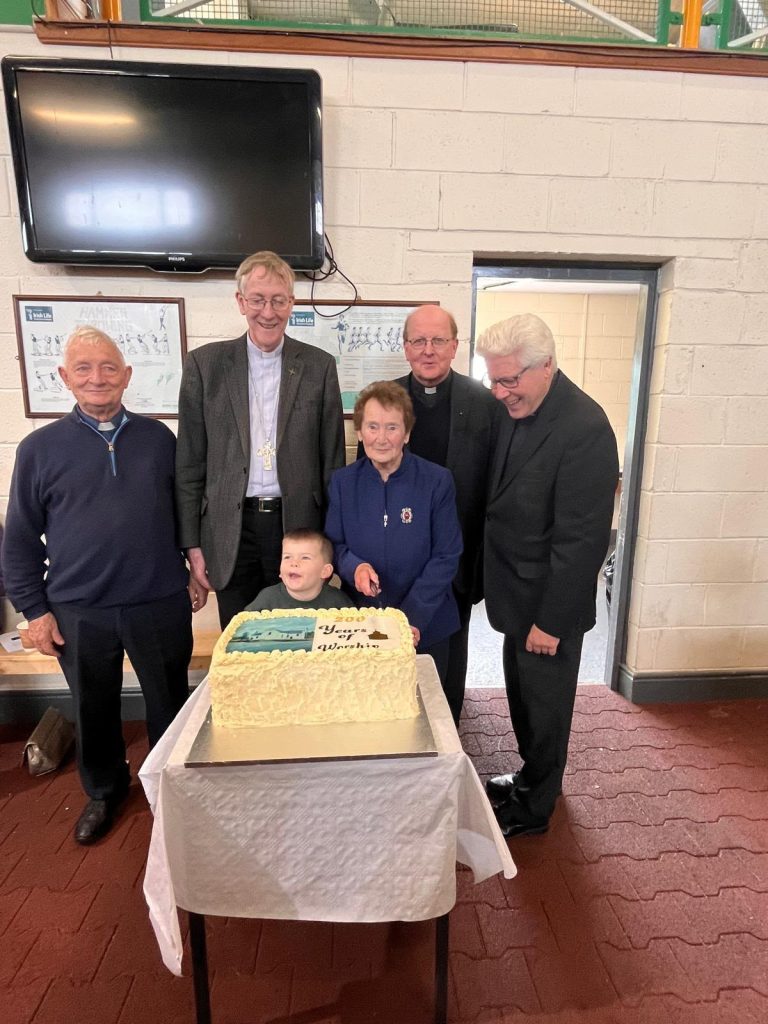
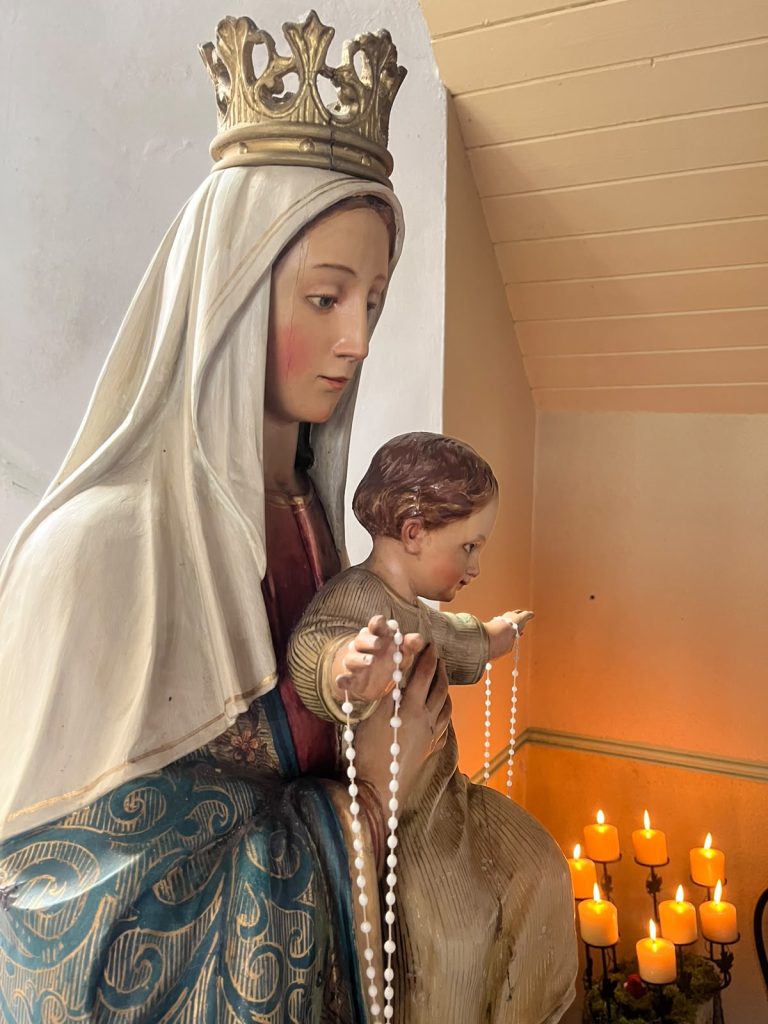
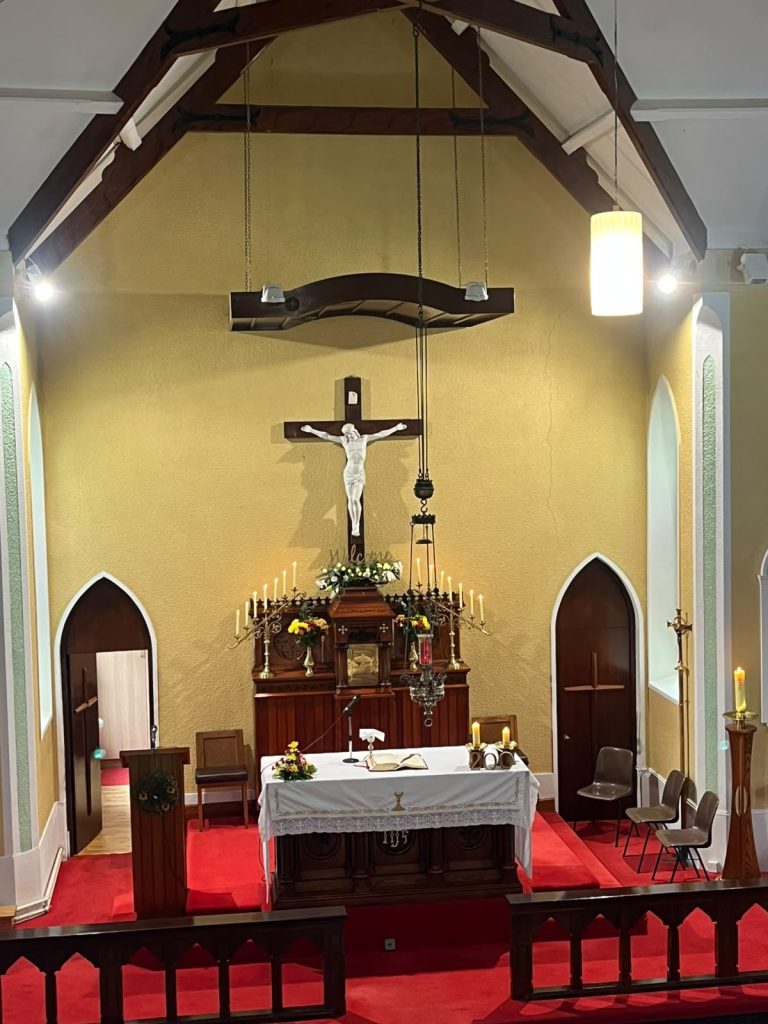
As we gather to pray on this Twenty Seventh Sunday in Ordinary Time, we do so to honour the bicentenary anniversary of this church, dedicated to the Blessed Virgin Mary here in Mayo. The history of St. Mary’s Church isn’t to be found in reputable history books, but in the lives and hearts of those, like all of you, who take time to worship God here, over the generations.
We begin by returning to the vineyard that is parish, that is our faith life this Sunday morning, and offer an account of the current lease we all hold on it, and pray for forgiveness for any breaches to that lease agreement we entered the day of our baptism …
Is tusa Tobar na Trócaire – you are the wellspring of mercy:
A Thiarna, déan trócaire
Is tusa Slí na Fírinne – you are the way of Truth:
A Chríost, déan trócaire
Bí linn i gconaí, ós ár gcomhair amach – be with us always, showing us the way. A Thiarna, déan Trócaire
Homily:
It’s another Vineyard Sunday! The third consecutive weekend, that Jesus tells a parable about a vineyard. Two weeks ago, we had the parable of the workers in the vineyard, remember the squabble over earnings, how the one who clocked in at the eleventh hour, was paid the same as those there all day. Last week it was the parable of the two sons asked by their dad to go to the vineyard; one went, having said he wouldn’t, and one who said he’d go, never did. For Jesus it is not our initial response that matters, but where we have the courage to end up. It’s not our words but more importantly where do our feet take us!
For generations Colliery Christians have worn a path to St. Mary’s Church. For the men, their feet perhaps had spent all day in the coalmines; for the women, perhaps rearing young families, both of them came together to give God thanks for their life, their family, they all made there ways to this sacred place.
The Diocesan historian Comerford reminds us “anthracite coal abounds in this district. The coal formation commences near Timahoe, and extends east and south-east to the Barrow, and southwards almost to the Nore … In the summer of 1836, 64 pits were at full work”[1]. As we hurdled anthracite into the Aga cooker at home all those years back, little did I realise that anthracite at one time could have come from these parts.
The Patrician archivist Br. Linus Walker saw Doonane/Mayo as the smallest parish in the diocese – “seven miles long and four wide”[2]. In the year 1800 there were 3,000 people living in this parish. The oldest parish register reminds us that on 10th October 1824, eighty children made their First Holy Communion. By 1828 the population here had risen to 4,500. As the coalmines closed, so did the population shrink with the closures. A 44% decline is recorded in thirty years in the mid 1800’s.
While there is little written by way of history of this church, it’s accepted that St. Mary’s Church was built in 1826, so our celebration taking place at this time. Peadar Mac Suibhne in his wonderful Carlovia Collections definitely tells us “The church at Mayo, Doonane parish, was built during the episcopate of Dr. Doyle, 1819-1834. It’s design is plain and simple. Probably Cobden was the architect”[3]. Thomas Cobden, the English architect, whose work was much admired by JKL, Bishop Doyle, of course designed the Cathedral, the north wing of Carlow College, St. Patricks, the tower and spire of St. Mary’s Church of Ireland, Carlow and Duckett’s Grove. So St. Mary’s Church, Mayo can now be listed in his magnum opuses!
Br. Linus goes into great detail on a letter, dating back to 1894 from a Fr. Gilligan, an exile from Donnane/Mayo, speaking of his fondness for this church, wishing to donate money to provide seating. He specified that the seating was “for the benefit of the poor, as I know that the wealthy are sure to look after themselves”[4]. Linus also cites that in 1899 the first set of Stations of the Cross were erected here. Over the intervening period much work has been done by many to enhance and contribute to the upkeep of this sacred place. Today we gather to say thanks.
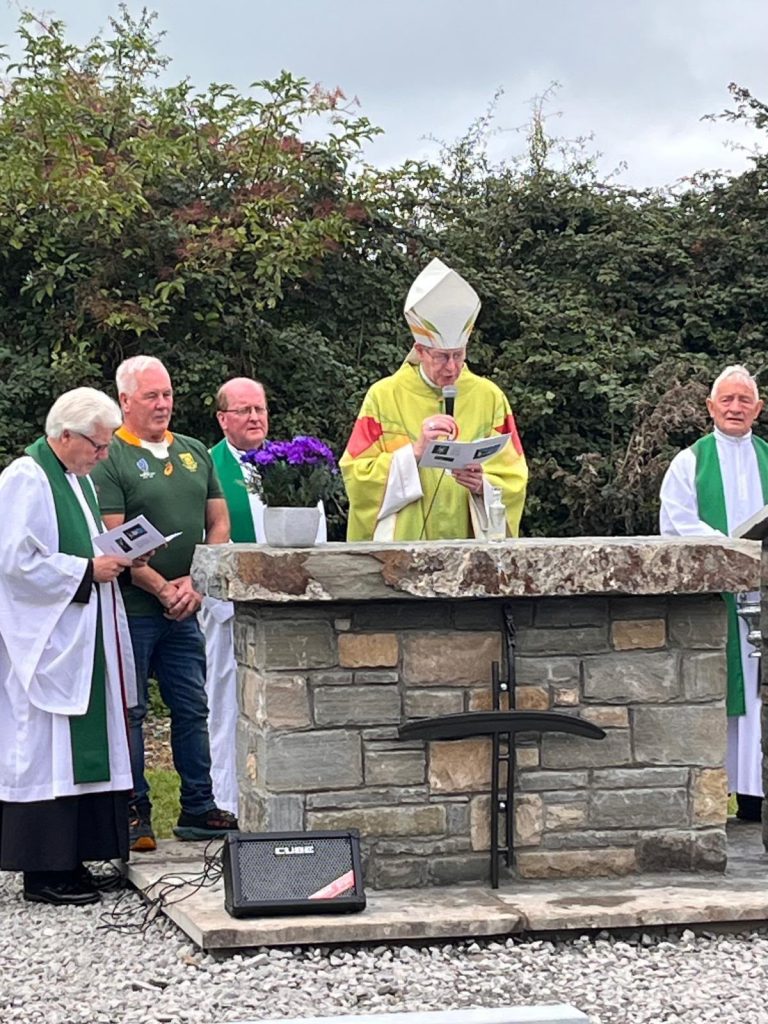
The wonderful additions to the Church and grounds marking this bicentenary include an altar and ambo made from local indigenous crettyard stone erected outside for Graveyard Masses. Close to the altar and ambo rests the second last woman hung in Ireland, Mary Daly, associated with what has come to be known as ‘The Clonbrook Murder’. The stunning cross on the front of the stone altar is fashioned from an old farming scythe. Later in our Mass a communion bowl hewn out of mahony and yew, sourced from the Church of Ireland church grounds here, is a poignant reminder of the good relations that exist between our two faith communities. I love the fact that the school children in Mayo NS and Ardough NS have been busy colouring images of St. Mary’s which are on display this morning.
The parable of the vineyard is not merely about people who lived long ago. Every human heart is a little vineyard; every parish community is a larger vineyard; every diocese is a much bigger vineyard. Each of us belong to God. He has planted faith within us. He has watered us in Baptism; nourished us with His Body and Blood; offered us countless moments of blessings on days of joy and accompaniment in times of sorrow. He looks for fruit. This morning the best way we can celebrate this bicentenary is by living fully our baptismal calling, involving ourselves in parish, in the unfolding faith story here.
There is a beautiful Latin hymn which is often sung on the anniversary of a church:
“Locus iste a Deo factus est
inaestimabile sacramentum,
irreprehensibilis est”.
It translates roughly:
“This place was made by God,
a priceless sacrament:
it is without reproach”.
What a beautiful recognition of St. Mary’s Church where little is extant of the history of this place, but it is written in the vineyards of those hearts who worship here faithfully every Sunday, and those whose feet took them here, in times past.
[1] Comerford, Michael: ‘Collections: Dioceses of Kildare & Leighlin III’, James Duffy & Sons, 1886, pg. 197
[2] Walker, Linus: ‘Beneath Slievemargy’s Brow’, Leinster Express, 2001, pg. 17
[3] Mac Suibhne, Peader: ‘Carlovia 2’, pg. 120
[4] Walker, Linus: ‘Beneath Slievemargy’s Brow’, Leinster Express, 2001, pgs. 23-24